Art Jargon - when will it end?
Almost 30 years after graduating from art school, I felt the need to read the book How To Be An Artist. That’s partly because I have developed an awareness of Jerry Saltz, the Pulitzer Prize winning author and chief art critic for the New York magazine. That awareness began when I saw him being interviewed in the documentary “The Lost Leonardo”, where he did a wonderful send-up of a Christies auctioneer.
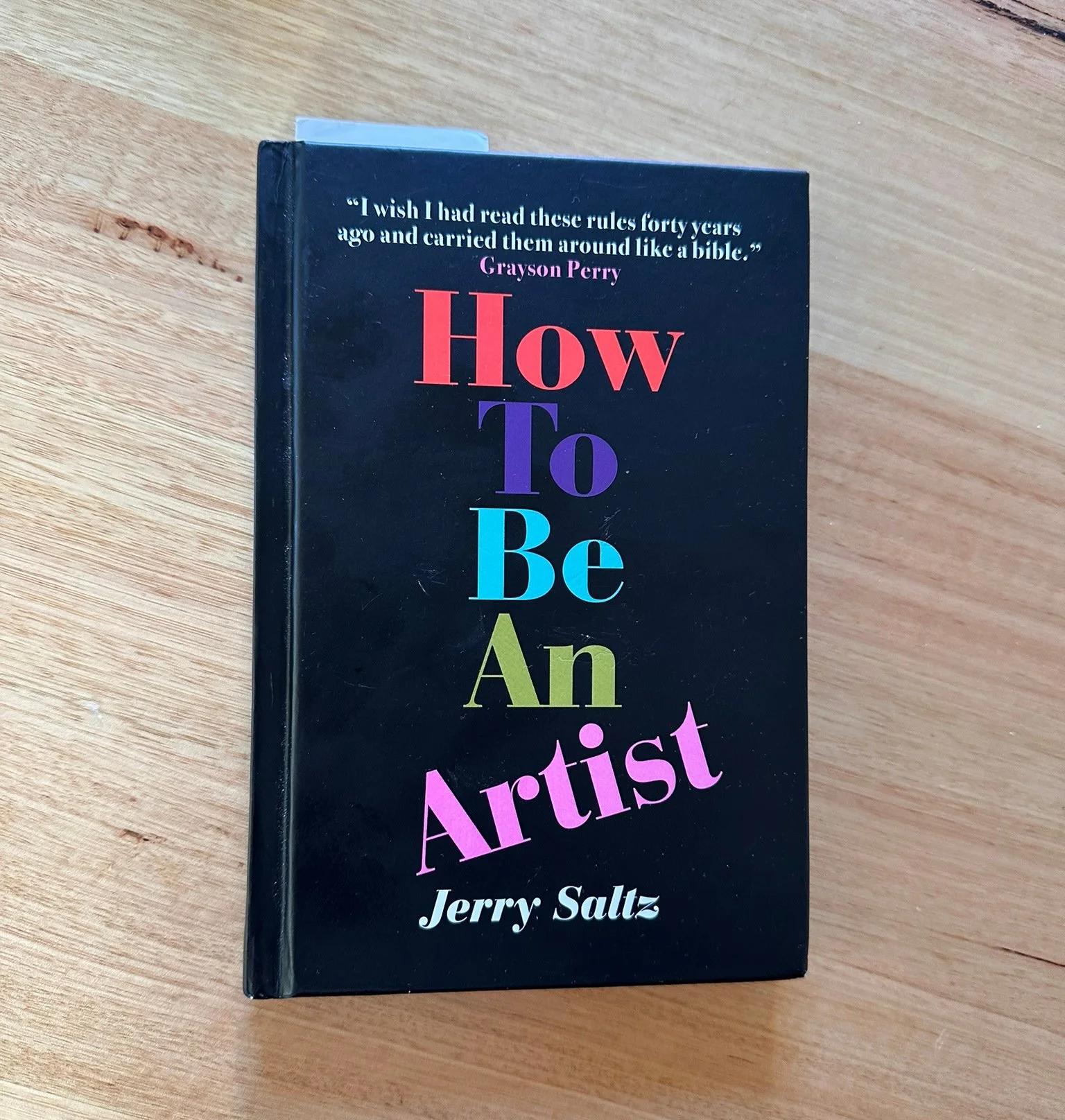
The book is full of practical advice on how to make it in the fiercely competitive, yet at the same time lonely (as far as I’m concerned), art world. English writer and artist Grayson Perry describes the book as being, among other things, bullshit-free, which brings me to the chapter “Learn To Write About Your Work.”
His basic advice is “keep it simple, stupid”. He suggests that we avoid humbug and that we write in our own voice when expressing our artistic goals. We should avoid post-modernist rhetoric which he believes has lost value in today’s art world. He is referring to art speak which has been described as a jargon heavy, overly academic and often obscure language often used by some curators, critics and galleries in press releases, exhibition catalogues and artist statements.
But has art speak really lost its hold on the contemporary art scene, as Saltz suggests? I’m not so sure. Recently I was listening to the podcast Waldy and Bendy’s Adventures in Art featuring the British art critics Waldemar Januszczak and Bendor Grosvenor. At one point they were discussing the 2026 Venice Biennale before the conversation spiraled off to issues of pretentious writing, and how people use it when they really don’t know what to say about something.
In another episode, they were bemoaning the sharp decline in the number of British students studying art history which they found deeply depressing. They believe young people are being put off studying art by the jargon heavy way that art is discussed in academic circles. Reference was made to a QAA (Quality Assurance Agency) document outlining how art should be taught in UK higher education which, according to Grosvenor, is so loaded in politics and theory that it is almost incomprehensible. He thinks the purpose of all this is to make art history more exclusive and be taken more seriously as a professional subject. He believes steps need to be taken to popularize the subject and thus make it more appealing to young students.
I can remember being bombarded with art jargon all those years ago when I was at art school in Melbourne, and it never occurred to me to respond by saying that I want to be an artist, not a wordsmith.
Januszczak resonded by saying that in his art programs he believes it’s important to communicate in a language that’s easily understood, because art is about life, death, love, sex, horror, it’s about the simple things in life that happens to us all the time. Besides, what do we know about past civilizations? Largely by the art that’s left behind.
I’m not even going to broach the issue of tertiary fees. That’s another story entirely.
Death of NFTs?
A few years ago it seemed that NFTs were a revolutionary way of owning unique pieces of digital content - music, art, videos. The peak of the NFT boom was August 2021 when trading volumes soared to nearly $3 billion per month. A few months earlier, a digital work titled “Everydays - the First 5000 Days” by American artist Beeple sold at Christies for USD69.3 million making it the most expensive NFT. There are suggestions that today the work is worth around $100, so what happened and what exactly are NFTs?
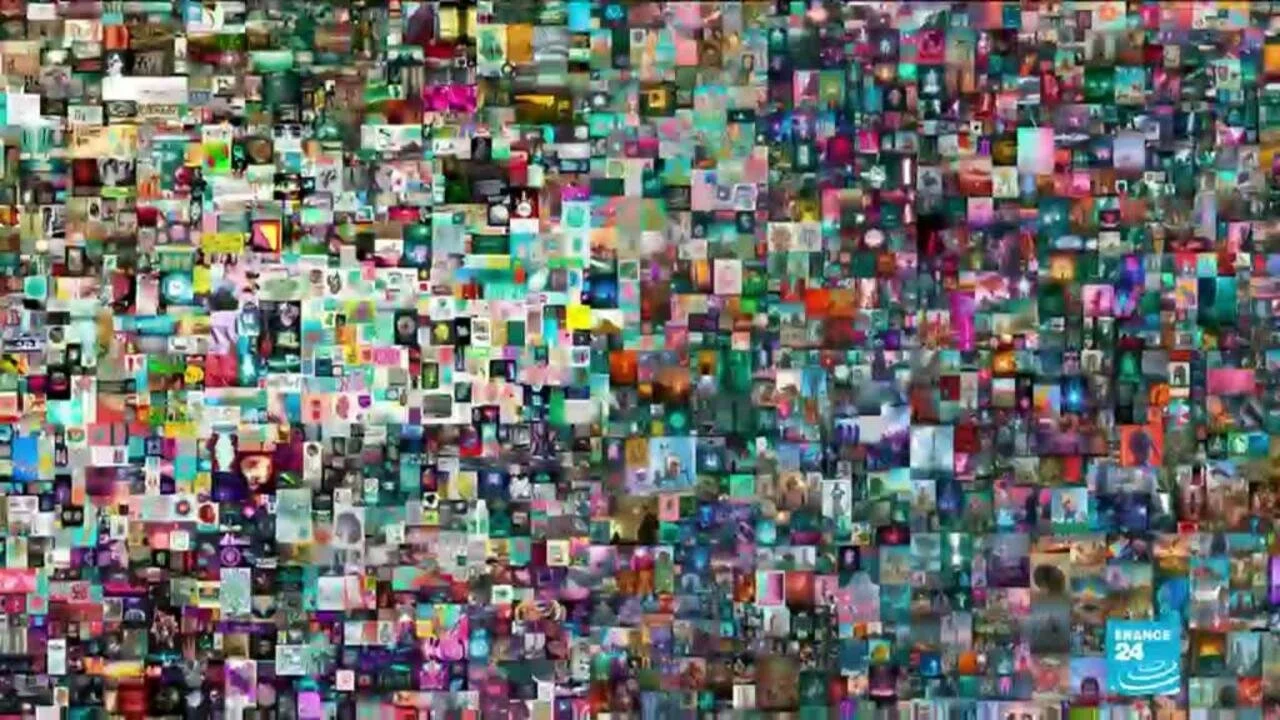
Everydays; The First 5000 Days Beeple (BBC)
NFT stands for non fungible token and it allows you to own a digitally created work of art, but you don’t have control over the copyright and distribution rights of the image. You can “own” an image but you can’t stop people reproducing it. In effect, you get a gold token or certificate and that means all you really own is a code, and bragging rights. I’ve heard NFTs being described as theoretical ownership.
The price of digital artworks is often based on their perceived future value. At the time of the auction of “Everydays..” art historians Waldemar Januszczak and Bendor Grosvenor were less than impressed, asking a very pertinent question. What happens to these digital artworks, many of which are Jpegs, when the technology supporting them is superceded? And for how long will we continue to view the world through a computer screen before new technology sweeps all that away?
So what of “Everydays….”? The work itself was produced over a 14 year period by Beeple (real name Mike Winkelmann) and consists of 5000 digital images collaged together to create an enormous image. Each individual image took one day to produce. The technology behind NFTs is similar to that used in cryptocurrency.
(my london)
And then, wouldn’t you know it? The bubble burst. In September 2025, Christies announced that it was closing its digital arts department. In 2024, Sotherbys laid off most of its Metaverse and NFT team amid a general contraction in the art market. The trading volume of art NFTs fell from a high of $2.97 billion in 2021 to just $197 million in 2024.
A report published in 2024 by NFTevening said that the market for NFTs has been in such a dramatic downturn since 2023 that 95 percent of them are considered “dead,” with the average NFT owner experiencing a 44.5 percent loss on their investment. Oh dear.
Perhaps there is no real substitute for a physical piece of artwork that you can actually wrap your arms around?
References;
Artnet.com
Artnews.com
Waldy & Bendy’s Adventures In Art - Podcast