Neglecting The Arts
There was a time when Labor governments in this country were supportive of the arts. They realised the contribution the arts made to the cultural wellbeing of a community. Indeed, books have been written on the subject. One that comes to mind is Art As Therapy by Alain De Botton and John Armstrong. They believe that art should be used as a therapeutic tool to help us lead more fulfilled lives. Art, they argue, can help guide, exhort and console its viewers and can help them become better versions of themselves.
The authors list seven functions of art;
Remembering - we are notoriously bad at remembering things. Consider our impulse to take photographs of ourselves and others in certain locations. Art is a way of preserving experiences, especially fleeting ones - the significance of which may escape us at the time.
Hope - the love of “Prettiness” in art is often downgraded, yet art can provide a release from the seemingly endless gloom brought on by the injustices of the world. I used to be hostile to Claude Monet’s fascination with haystacks and water lilies during the horrors of the first world war, but not anymore.
Sorrow - art can help us suffer more successfully by, perhaps, showing us how our suffering can be a universal phenomenon thus reducing the sense of loneliness. Or it can provide context or perspective to our particular form of sorrow.
Rebalancing - art can restore a measure of equilibrium in our lives which have drifted out of balance due to the pressures of relationships, work commitments, social commitments etc. We may have too much intensity, stimulation and distraction in our lives so being suddenly confronted with a quiet landscape painting or an architecture radiating calm can be very beneficial.
Self understanding - we have moods, preconceived ideas, hunches that we are not fully conscious of. It’s argued that poetry (for example) can take half-formed thoughts in our mind and give them clear expression so that we can understand ourselves better.
Growth - there were times when I had the habit of walking out of some exhibitions within a few minutes of arrival. This was a defensive stance with its origins possibly dating back to childhood. But these days I’ve learned to be more patient and allow the artwork to absorb into my psyche and, at to least attempt to understand the motivations of the artist.
Appreciation - the authors make the important point that one of the major causes of our unhappiness is that we find it hard to appreciate our everyday surroundings. “We suffer because we lose sight of the value of what is before us and yearn, often unfairly, for the imagined attractions of elsewhere.” Art can help us to honour the elusive but real value of ordinary life by presenting images of it.
From all of the above, it would appear that there is much to gain for governments investing in the arts. This may include a reduction in their health budgets - in particular mental health budgets. Perhaps this concept is too sophisticated for governments to grasp. Instead, we find governments of both persuasions burying the arts porfolio in a myriad of others such as transport and infrastructure. And now the Allan Government in Victoria has announced cuts to art funding. Writers, performing and visual artists are all set to suffer as a result - a strange move for what is supposed to be the cultural capital of Australia.
Yes, Victoria has been mired in debt since the pandemic but a more enlightened approach is surely needed. Writers Victoria has had its funding cut to zero, and other cultural institutions have also suffered savage cuts including Abbotsford Convent.
A new dark era for the arts in Victoria has descended upon us.
References;
Art As Therapy, Alain De Botton & John Armstrong, Phaidon Press
Visual Journaling
In the past, many visual artists forged partnerships with poets and writers who were able to put into words their aspirations, but I don’t know any poets or writers and I’d rather not rely on AI, so here goes.
While at first glance it may not seem so, there is a common thread running through my work. That of loneliness, perhaps even anxiety dating back to early childhood. To me it’s all about self-expression, about capturing a moment from the past that had a profound impact and which resonates to this day. You might want to describe my art practice as a form of visual journaling. But I don’t go out of my way to paint just emotions - that would never work.
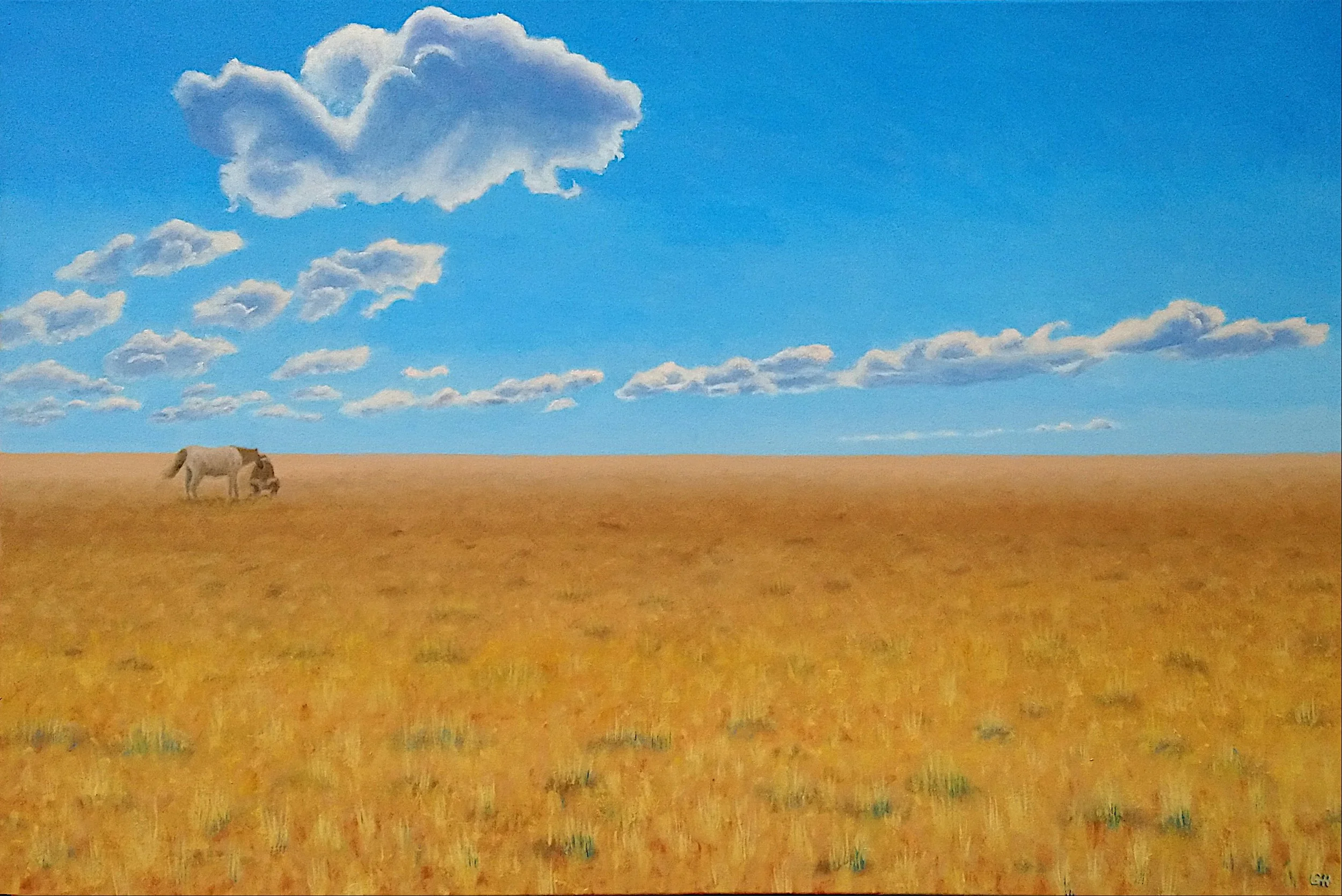
Last Ride, oil on canvas
Loneliness can be so difficult to categorize; not all people who live their lives in the absence of others are lonely, while it’s possible to experience acute loneliness in a room full of people. I need to be solitary when contemplating my next arts project, but the need for intimacy (or at least some form of contact) is always lingering in the background and sooner or later it will rise to the surface and demand some attention. And then there is the sense of not belonging in this world, an emotion that many people suffering some form of mental illness would be familiar with.
But there are times when I want to present images of calm and tranquility, hence a series of paintings based on Melbourne’s Botanical Gardens. It’s a location I often have trouble leaving after a day of what might be called meditation. The writer Alain de Botton once said that beauty is the promise of happiness. I can remember visiting the gardens as a small child and experiencing a sense of calm that was very rare back then.
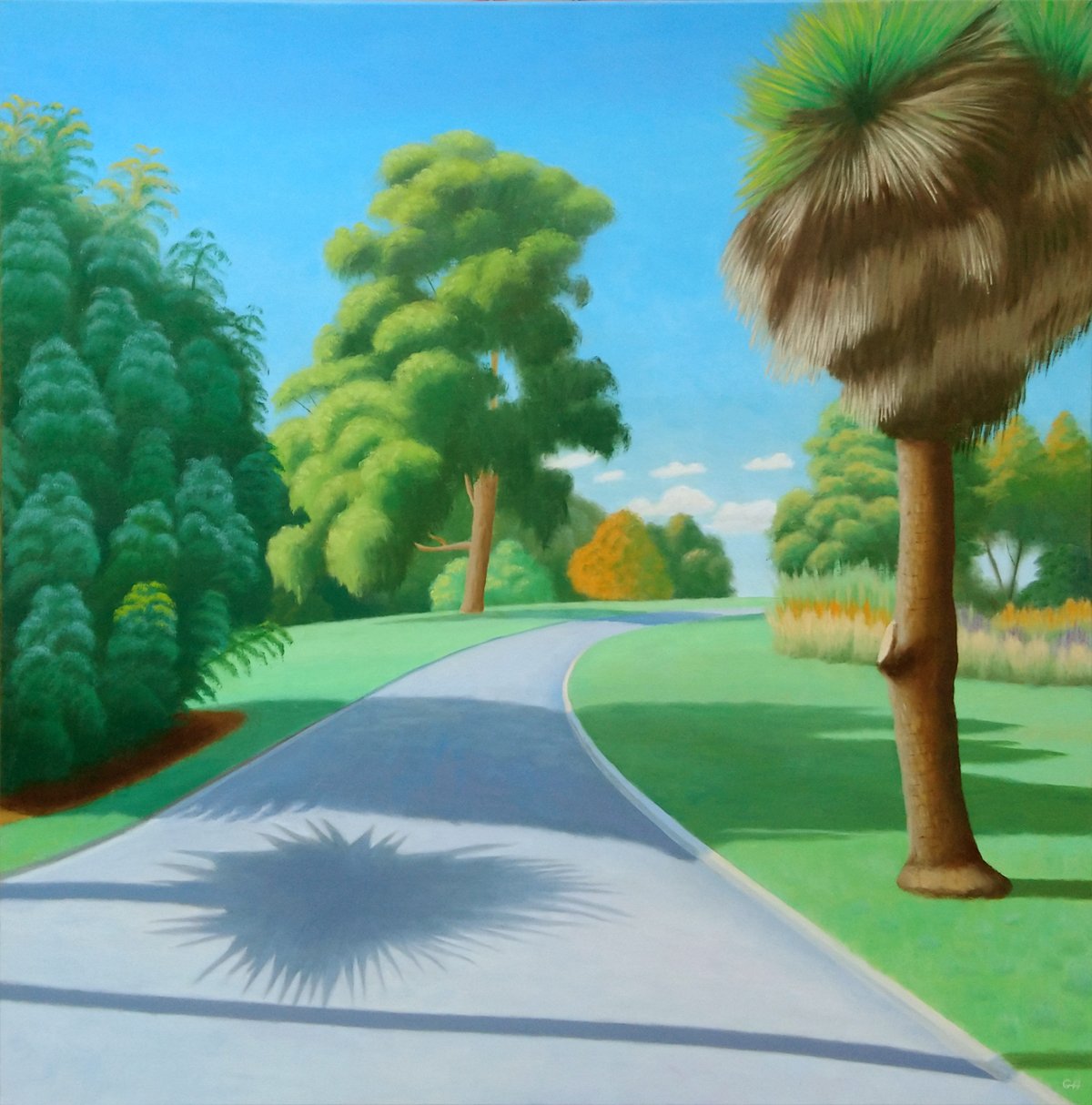
Hill of Contentment, oil on canvas
From a very young age, I found myself more interested in the environment I was in rather than the company I was keeping. This may have been the result of shyness, or a desire for escape.
It’s been said that the great writers have the reader inside them, that is “How will my writing fit into someone else’s life?” The same must also apply to visual artists. How might something I’m about to paint fit into the viewer’s experiences? Yet at the same time, artists must not think they can dictate how a viewer will respond to their work. Jeffrey Smart once said, “what gives the artist the right to think that he/she can get into someone else’s head?”
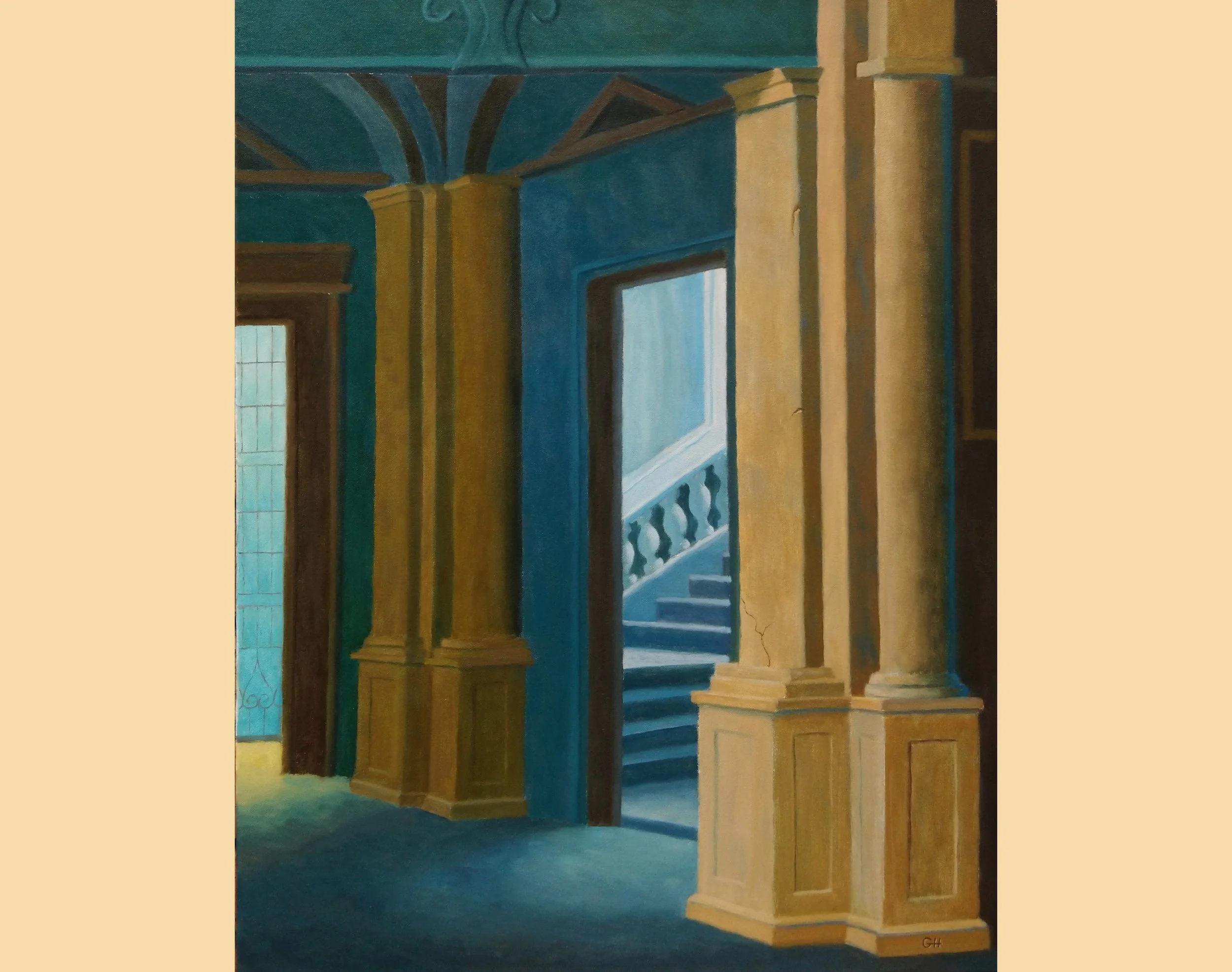
Stairway To Heaven, oil on canvas
Loneliness has been described as the most shameful of experiences. This might stem from the belief held by some that there is no excuse for it. Loneliness has also been described as a very special place - well, perhaps in moderation. Too much of our own company can have consequences for our health and mental wellbeing. As I discovered some years ago.
It has also been described as the most incommunicable emotion for the sufferer. There seems a reluctance on the part of the sufferer to discuss it, possibly due to the anxiety that is aroused by trying to do so. But it’s important to find an outlet to express these emotions and I’m grateful to have found it in my art practice.